
Key Points
- Tingling and numbness are early warning signs, not just a normal part of aging. When you feel “pins and needles,” burning, or numbness, it means your nerves aren’t communicating properly. These sensations are your body’s way of saying something deeper needs care and attention.
- Conditions like pinched nerves, sciatica, or neuropathy can all feel similar, but each stems from a different source. Understanding what’s behind your symptoms helps guide the right kind of care.
- Natural treatments such as chiropractic care, gentle exercise, laser therapy, massage, and nutrition can work together to ease pressure, restore balance, and support healthy nerve function.
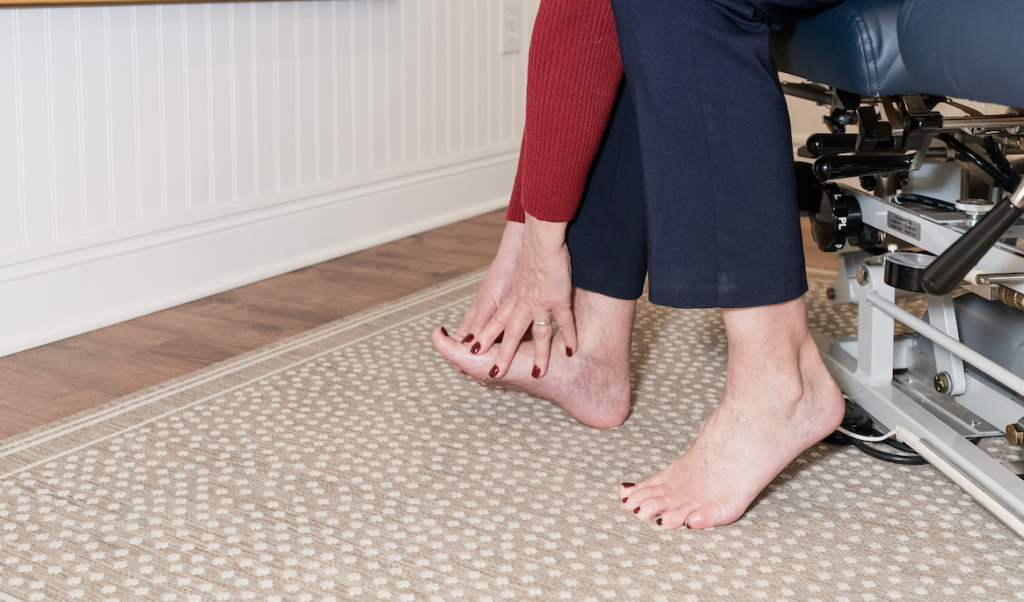
Have you ever gotten out of bed in the morning, placed your feet on the floor, and instantly felt that odd “pins and needles” sensation? Or maybe you’ve noticed a little numbness and tingling in your hand that’s started to bother you and wondered, Is this normal? Should I be worried?
At Simply Southern Chiropractic Center, we see these kinds of symptoms every day, and while they’re common, they’re not normal. They’re your body’s way of letting you know something’s off, that your nerves may not be communicating properly.
Before you write it off as “just part of getting older” or “sleeping funny,” let’s talk about what’s really happening when your nerves start sending those strange signals on a consistent basis.
Table of Contents:
- Tingling, Burning, and Numbness Explained
- Common Causes of Nerve Pain and Numbness
- Natural Treatments for Nerve Pain
- Finding Lasting Relief from Nerve Pain
Tingling, Burning, and Numbness Explained
Imagine your nervous system as a massive web of tiny electrical cords, all buzzing with information. Every second, your brain and body are talking — sending signals back and forth to help you move, feel, and react without even thinking about it.
But when one of those cords gets bent, squeezed, or frayed, the messages are interrupted and even completely disconnected. Instead of smooth communication, you get static — sensations like tingling, burning, or numbness that make parts of your body feel “off.” Basically, it’s your body’s version of a bad connection.
These symptoms can show up in different ways, such as:
- Tingling or “pins and needles” in the hands, feet, arms, or legs
- Burning or stinging sensations that come and go
- Numbness or loss of feeling in certain areas
- Weakness or heaviness in the limbs
- Balance or coordination problems that feel new or unexplained
Sometimes that “miscommunication” begins in the spine, where a nerve is pinched or irritated. Or it starts farther out, like in the smaller nerves that travel into your hands, feet, or legs.
Either way, those sensations are your body’s way of getting your attention and saying something’s not quite right. And the only way to truly fix the problem is to find out what’s behind it.
Let’s take a look at a few of the most common causes of nerve-related symptoms.
Common Causes of Nerve Pain and Numbness
Nerve issues can come from many different places. Sometimes the cause is simple, like pressure on a nerve in your back or neck. Other times, it’s more complex and related to how your body heals, moves, or even processes nutrients.
Below are some of the most common reasons people experience tingling, burning, or numbness and how they differ.
Pinched Nerve
A pinched nerve happens when surrounding tissues — like bones, muscles, or discs — put too much pressure on a nerve.
- Can start in the neck or back, then radiate into the arms or legs.
- Common causes include poor posture, repetitive strain, or spinal misalignment.
- May cause sharp pain, numbness, or weakness in one specific area.
Sciatica
Sciatica occurs when the sciatic nerve (the body’s largest nerve) becomes irritated or compressed.
- Pain usually begins in the lower back and travels down one leg.
- Some people describe it as sharp, shooting, or electric.
- It’s often caused by a herniated disc or inflammation near the lower spine.
Peripheral Neuropathy
Peripheral neuropathy refers to damage in the peripheral nerves — the ones responsible for sensation and movement in your limbs.
- Most often starts in the feet or hands, then gradually moves upward.
- May cause tingling, numbness, or burning sensations.
Can result from poor circulation, injuries, or long-term nerve stress.
Diabetic Neuropathy
Over time, high blood sugar can start to damage the nerves, leading to this common type of neuropathy.
- Usually affects the feet and legs first.
- Can lead to numbness, pain, or balance problems.
Early detection and consistent care can help prevent it from worsening.
Chemotherapy-Induced Neuropathy
Some cancer treatments can affect the small nerve fibers in the hands and feet. The severity depends on the type of medication and the length of treatment.
- Often described as pins and needles, burning, or sensitivity to touch.
- May affect balance and coordination.
Other Contributing Factors
Not all nerve issues are caused by injury or pressure. Other contributors include:
- Certain medications or long-term alcohol use that damage nerve health
These conditions may appear similar on the surface — tingling, numbness, burning — but as you can see, the root cause behind them can be completely different. Finding out where and why the nerves are being affected is the first step toward real relief.
Natural Treatments for Nerve Pain
There’s no one-size-fits-all fix for nerve pain. Everyone’s symptoms, lifestyle, and health history are different, which means every care plan should be too.
The most effective approach looks at the whole person — how your body moves, functions, and heals — and often blends several natural, non-invasive methods that work together to support the nerves.
Common elements of a personalized plan may include:
- Chiropractic care to take pressure off nerves and keep the spine aligned so signals can move freely.
- Therapeutic tools such as low-level laser or peripheral nerve stimulation help to improve circulation and support nerve healing.
- Nutritional support — especially B vitamins and other nutrients that strengthen and protect nerve tissue.
- Gentle movement or exercise therapy to improve balance, coordination, and overall stability.
- Healthy daily habits like better posture, staying hydrated, and managing stress to help prevent irritation from returning.
- Massage or soft-tissue therapy to release muscle tension that may irritate nearby nerves and improve blood flow.
At Simply Southern Chiropractic Center, we bring these elements together into a personalized plan built around you — your symptoms, your comfort level, and your goals. By addressing both the cause and the symptoms, we help your nerves communicate properly again and your body function at its best.
Finding Lasting Relief from Nerve Pain
If tingling, burning, or numbness has become part of your daily life, don’t ignore it. These sensations are your body’s way of asking for attention — and the sooner you address them, the sooner you can start feeling better.
At Simply Southern Chiropractic Center, we’ll work with you to create a care plan that supports long-term healing. Every step is gentle, natural, and designed to help your body function the way it’s meant to.
Ready to start feeling more comfortable in your body? Schedule a consultation with SSCC and take the next step toward calmer nerves and lasting relief.
References
Provencher, B., Descarreaux, M., & Piché, M. (2021). Clinical Effectiveness and Efficacy of Chiropractic Spinal Manipulation for Spine Pain. Frontiers in Pain Research, 2, 765921. https://doi.org/10.3389/fpain.2021.765921
Onifer, S. M., Sozio, R. S., DiCarlo, D. M., Li, Q., Donahue, R. R., Taylor, B. K., & Long, C. R. (2018). Spinal Manipulative Therapy Reduces Peripheral Neuropathic Pain in the Rat. Neuroreport, 29(3), 191. https://doi.org/10.1097/WNR.0000000000000949
Abdelrahman, K. M., & Hackshaw, K. V. (2021). Nutritional Supplements for the Treatment of Neuropathic Pain. Biomedicines, 9(6), 674. https://doi.org/10.3390/biomedicines9060674
Klowak, M., Lau, R., Mohammed, M. N., Birago, A., Samson, B., Ahmed, L., Renee, C., Meconnen, M., Sam, M., & Boggild, A. K. (2024). A Systematic Review of Dietary Lifestyle Interventions for Neuropathic Pain. Journal of Clinical Medicine, 13(22), 6766. https://doi.org/10.3390/jcm13226766