Key Points
- Chiropractors focus on the spine, joints, and nervous system to help your body move the way it’s meant to. Gentle, precise adjustments relieve pressure, improve motion, and help your body function more smoothly.
- Physical therapy helps rebuild strength and stability after injury or surgery, while massage therapy relaxes tight muscles and eases tension. Together, they help your body move comfortably and recover more fully.
- Each therapy plays a unique role in helping you feel your best. Depending on your condition and comfort level, combining them can often deliver faster, longer-lasting results.
A sore back, tight shoulders, or that stubborn stiffness that just won’t quit — we’ve all been there. But when it comes to finding relief, do you call a chiropractor, book a massage, or ask your doctor about physical therapy?
With so many options (and opinions!) out there, figuring out where to start can feel overwhelming. You don’t want to waste time guessing — you just want to feel better. This guide breaks down the differences between chiropractic care, physical therapy, and massage therapy in simple terms, so that you can make a confident choice and get back to feeling your best.
Table of Contents:
- What Chiropractic Care Is and How It Works
- What Physical Therapy Is and When It’s Most Helpful
- What Massage Therapy Is and How It Helps
- Chiropractic vs. Physical Therapy: What’s the Difference?
- Chiropractic vs. Massage: What’s the Difference?
- Finding the Right Care for You
- References
What Chiropractic Care Is and How It Works
Chiropractors focus on the spine, joints, and nervous system — the parts of your body that keep everything moving and communicating properly. When these areas become misaligned or restricted, it can lead to pain, stiffness, and even affect how your muscles and nerves function.
A chiropractor’s main goal is to restore healthy movement and alignment, helping your body work the way it’s meant to.
Chiropractic care can benefit people of all ages and activity levels — whether you sit at a desk all day, stay active, or deal with chronic pain. It’s especially helpful for:
- A stiff neck or sore back that just won’t loosen up (even with massage)
- Headaches and migraines that seem to start in your shoulders or neck
- Nerve pain or sciatica that sends tingling or burning down your leg
- “Tech neck” from looking down at screens all day
- Tight or achy joints that make it harder to move comfortably
- Shoulder, hip, or knee discomfort from overuse or misalignment
- Chronic tension or muscle tightness that keeps coming back
- Limited range of motion that makes simple movements feel restricted
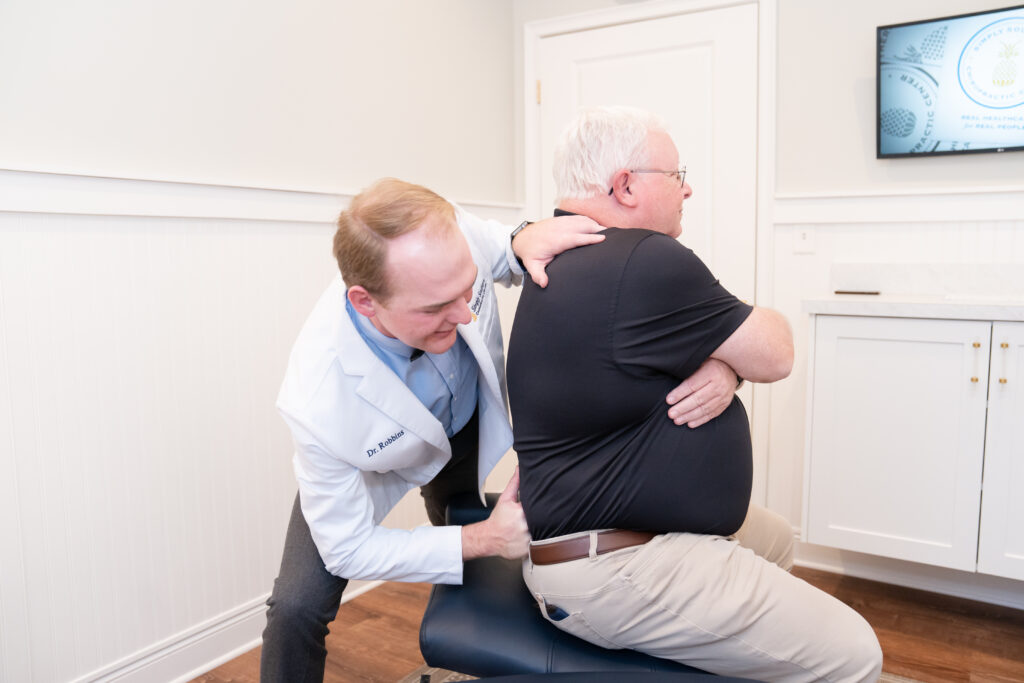
Chiropractors use gentle, hands-on techniques called adjustments — quick, controlled movements that target joints that aren’t moving as they should. These adjustments help restore motion and relieve pressure on nerves.
Here’s what happens when your body is back in proper alignment:
- Your nervous system communicates more efficiently
- Muscles relax and tension eases
- Movement feels smoother and more natural
- You experience less pain and stiffness
- Posture improves and you move with greater freedom
Many patients also find that regular care helps them move better, sleep better, and feel more balanced overall. At Simply Southern Chiropractic Center, we help your body heal and stay balanced — so you can move, work, and live with less tension and more ease.
What Physical Therapy Is and When It’s Most Helpful
Physical therapy (PT) focuses on rehabilitation, strength, and movement retraining. While chiropractic care restores alignment, physical therapy helps your body rebuild strength and stability — especially after an injury, surgery, or long period of limited movement.
A physical therapist’s goal is to help you move safely and confidently again, reduce pain, and prevent future injuries.
PT can benefit people recovering from surgery, injury, or ongoing pain that limits their daily activities. It’s especially helpful for:
- Post-surgery recovery (like knee or hip replacements)
- Pelvic floor therapy after childbirth or hysterectomy
- Vertigo or balance problems (using specialized techniques like the Epley’s maneuver)
- Sports or work injuries that cause strain, weakness, or instability
- Chronic pain or mobility loss that makes everyday movement difficult
- Muscle imbalances or weakness that affect posture or performance
Many patients turn to physical therapy when they need guided support to get back on their feet — literally. It’s about retraining the body to move properly and regain confidence in motion.
Physical therapists use a variety of hands-on techniques and guided exercises to restore movement. Sessions may include:
- Targeted stretches and strengthening exercises
- Balance and stability training
- Manual therapy to loosen tight or restricted areas
- Education and home exercises to keep progress going between visits
At its core, physical therapy helps you move better, feel stronger, and get back to life after injury or surgery. It’s steady, hands-on work that helps your body rebuild and stay strong for the long run.
What Massage Therapy Is and How It Helps
Massage therapy works with the muscles, fascia, and soft tissues that hold onto daily stress. Through gentle, hands-on techniques, it helps release tightness, improve circulation, and calm the nervous system — allowing your body to relax, recover, and move with greater ease.
A massage therapist’s goal is to reduce tension, ease discomfort, and support your body’s natural healing process through techniques that promote relaxation and balance.
Massage therapy can benefit just about anyone, from athletes to office workers to those dealing with chronic pain or stress. It’s especially helpful for:
- Tight or sore muscles that don’t seem to loosen up
- Chronic pain or tension that returns again and again
- Fibromyalgia or muscle fatigue that makes movement uncomfortable
- Swelling or fluid buildup that slows recovery
- Stress, anxiety, or poor sleep that affect overall well-being
- Post-workout soreness or muscle strain from daily activity
Massage therapists use different techniques depending on what your body needs, including:
- Deep tissue massage for chronic tension or tight areas
- Lymphatic massage to reduce swelling and improve circulation/drainage
- Relaxation massage to ease stress and support recovery
Many patients find that regular massage helps them feel lighter, looser, and more relaxed — both physically and mentally. If you think you don’t have time to “pamper” yourself, remember a visit to a massage therapist is not just a treat; it’s part of maintaining a healthy, balanced body.
Chiropractic vs. Physical Therapy: What’s the Difference?
Chiropractic care and physical therapy both help your body move and feel better — but they do it in different ways. Think of them as two tools in the same toolbox: one isn’t better than the other; they just do different jobs. Sometimes you only need one to get results, and other times, using both together makes all the difference. The key is knowing what each one does and when to use it. So, what’s the real difference between chiropractic and physical therapy?
Chiropractic care focuses on the spine, joints, and nervous system. Chiropractors use quick, precise adjustments to restore alignment and movement. When the spine moves properly, nerves communicate better, muscles relax, and the body functions more smoothly overall.
For example, picture someone dealing with low back pain that flares up whenever they sit too long or bend to pick something up. Over time, their muscles tighten, movement becomes limited, and activities they love — like gardening, running, or yoga — start to feel uncomfortable. Chiropractic adjustments help realign the spine, reduce pressure on irritated nerves, and restore proper movement — often bringing noticeable relief and easier motion within just a few visits.
Physical therapy focuses on rehabilitation and strength. Physical therapists use guided stretches, exercises, and movement training to help rebuild control and stability — especially after surgery, injury, or long periods of limited activity.
Imagine someone recovering from knee surgery or a sports injury. At first, it’s tough to bend, walk, or climb stairs without discomfort. A physical therapist helps retrain those muscles through guided movement and strengthening exercises, gradually restoring confidence, stability, and ease of motion.
Here’s how they compare in a nutshell:
- Chiropractic care helps you restore motion, ease pain, and move comfortably again.
- Physical therapy helps you rebuild strength and confidence in how your body moves.
If you’re dealing with joint misalignment, back or neck pain, or posture issues, chiropractic care can help restore balance and mobility.
If you’re recovering from an injury or surgery, physical therapy helps you regain strength, coordination, and confidence in how your body moves.
Both approaches are hands-on and focused on helping your body heal naturally. Each plays a unique role — and together, they can help you move, feel, and function at your best.
Chiropractic vs. Massage: What’s the Difference?
Chiropractic care and massage therapy both help you feel better and move more freely — but they focus on different things.
Massage therapy works with the muscles and soft tissues to ease tension, reduce soreness, and boost circulation. The result? A body that feels looser, lighter, and more relaxed.
Chiropractic care targets the spine, joints, and nervous system. Chiropractors use quick, gentle adjustments to improve alignment and restore natural movement. When everything’s in sync, your body moves, functions, and heals more efficiently.
These two therapies often work hand in hand to help your body recover and recharge.
Picture a mom who spends her days lifting kids, hauling groceries, and tackling a nonstop to-do list. By evening, her shoulders, back, and neck are tight and sore. A massage melts away the tension, while a chiropractic adjustment restores alignment so she can move comfortably again. It’s the perfect reset for a body that does it all!
- Chiropractic care restores alignment and movement, improving how the spine and joints function.
- Massage therapy relieves muscle tension and stress, improving how the body feels and recovers.
Many people find that pairing chiropractic care with massage helps them recover faster, feel lighter, and stay that way longer.
Finding the Right Care for You
Chiropractic care, physical therapy, and massage therapy each bring something unique to the table — and knowing the difference helps you make the best choice for your health. The best approach depends on your condition, goals, and comfort level — and sometimes, combining them can deliver the best results.
At Simply Southern Chiropractic Center, our goal is to help you find what works best for your body. Whether that means restoring alignment, rebuilding strength, or easing muscle tension, we’ll guide you toward the right care plan for your needs and comfort level.
If you’re not sure where to start, give us a call or make an appointment. We’ll help you choose the care that gets you moving, feeling, and living your best naturally.
References
Sherman, K. J., Cherkin, D. C., Hawkes, R. J., Miglioretti, D. L., & Deyo, R. A. (2009). Randomized Trial of Therapeutic Massage for Chronic Neck Pain. The Clinical Journal of Pain, 25(3), 233. https://doi.org/10.1097/AJP.0b013e31818b7912
Haavik, H., Niazi, I. K., Amjad, I., Kumari, N., Ghani, U., Ashfaque, M., Rashid, U., Navid, M. S., Kamavuako, E. N., Pujari, A. N., & Holt, K. (2024). Neuroplastic Responses to Chiropractic Care: Broad Impacts on Pain, Mood, Sleep, and Quality of Life. Brain Sciences, 14(11), 1124. https://doi.org/10.3390/brainsci14111124
Paige, N. M., Miake-Lye, I. M., Booth, M. S., Beroes, J. M., Mardian, A. S., Dougherty, P., Branson, R., Tang, B., Morton, S. C., & Shekelle, P. G. (2017). Association of Spinal Manipulative Therapy With Clinical Benefit and Harm for Acute Low Back Pain: Systematic Review and Meta-analysis. JAMA, 317(14), 1451–1460. https://doi.org/10.1001/jama.2017.3086
Crawford, C., Boyd, C., Paat, C. F., Price, A., Xenakis, L., Yang, E., Zhang, W., & Group, W. (2016). The Impact of Massage Therapy on Function in Pain Populations—A Systematic Review and Meta-Analysis of Randomized Controlled Trials: Part I, Patients Experiencing Pain in the General Population. Pain Medicine: The Official Journal of the American Academy of Pain Medicine, 17(7), 1353. https://doi.org/10.1093/pm/pnw099